
Mary's Song
Christmas 2025
by Lisa and Julian
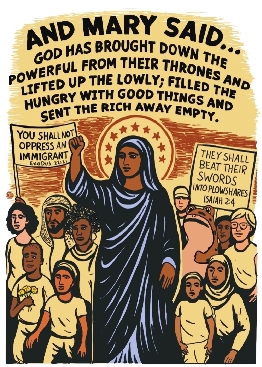
The words on the front of our Christmas card this year are taken from a song, traditionally referred to as the Magnificat, sung by a pregnant Mary of Nazareth, mother of Jesus (Luke 1:46-55). Her stirring words echo other women in Jewish tradition—especially Miriam, Moses’ sister—who sang of the compassionate, liberating action of God on behalf of the poor and oppressed. In the words of Dietrich Bonhoeffer, a German Lutheran pastor who was executed for his resistance to the Nazis:
This song has none of the sweet, nostalgic, or even playful tones of some of our Christmas carols. It is instead a hard, strong, inexorable song about collapsing thrones and humbled lords of this world, about the power of God and the powerlessness of humankind. These are the tones of the women prophets of the Old Testament that now come to life in Mary’s mouth.
In fact, due to its revolutionary tone, the Magnificat was banned from public recitation in British-occupied India and by military dictatorships in Guatemala and Argentina! Amid the brutality of Roman occupation, Mary dares to proclaim that the social hierarchies of wealth and power are about to be turned upside down. And her faith is rooted in the hidden, fragile, Spirit-gifted life growing in her womb—the life and light bursting into the world that we celebrate each Christmas.
We ask now: Can we hear this revolutionary song of Mary in our present struggles with genocidal violence, growing authoritarianism, religious ethnonationalism, and the demonization of immigrants, the LGBTQ+ community, and other marginalized people? Can we feel her presence accompanying us as we rise to challenge these interwoven systems of domination and stand for the inherent sacredness of all life?
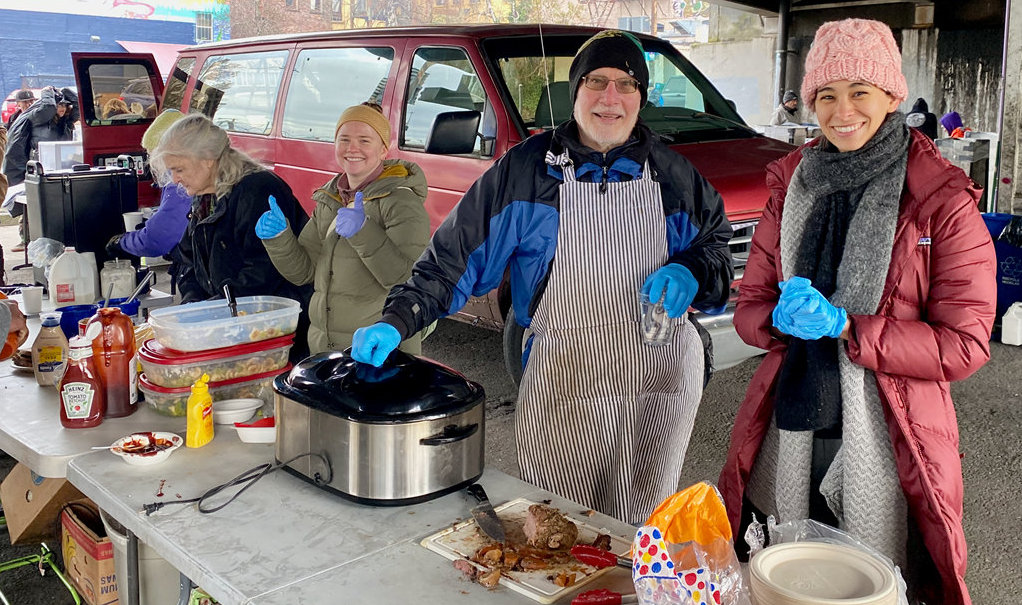
Serving with friends under the Morrison Bridge.
“We are called Dandelion House not only because of the ubiquitous presence of dandelions on the land, but because dandelions are a feisty, resilient, healing herb.”
Here at Dandelion House, our commitment to resisting systems of domination and, in the words Catholic Worker co-founder Peter Maurin, “building a new world in the shell of the old,” is embedded in our daily lives and the relationships we form along the way. This past year, we celebrated with our guest, Aydan, as he earned his GED. He continues to thrive through his participation in a pre-apprenticeship program, Constructing Hope, learning about and experiencing firsthand the various trades he might pursue. We hosted our summer barbeque and our 2nd annual cider press party, processing apples and pears from our and our neighbors’ trees. Our Friday meals served under the Morrison Bridge, prepared with love at our home with the generous help of volunteers, have grown to nourish more than a hundred and fifty people each week. This fall, we’ve even served dessert—homemade bread pudding and apple crisp!
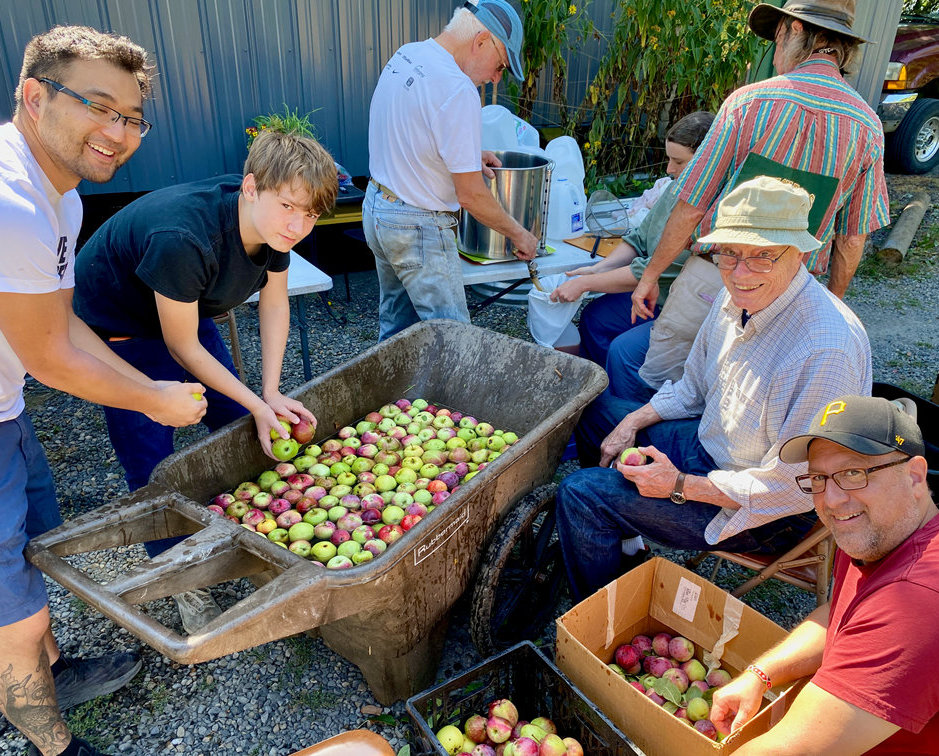
Cider press party!
In the summer, Fumi led the first Fierce Nonviolence Pilgrimage, immersing young adults in the spiritual roots and daily practices of nonviolent social change while visiting communities in the Pacific Northwest directly impacted by the U.S. nuclear arsenal. We were also delighted to host our summer intern, Neveah, whose curiosity, enthusiasm, and generosity with our guests greatly enlivened our community.
As the seasons have allowed, we’ve continued to expand our gardens and food forest, planting native plants and pollinators along the creek that winds through our land. We’ve also thoroughly enjoyed the company of all of you who’ve attended our weekly Sunday Soup and Contemplation and monthly Cosmic Liturgy of the Divine Feminine gatherings. Perhaps most excitingly, we are making progress towards our fundraising goals for a second house, which we hope to purchase in the coming year to expand our capacity to offer transitional housing and other activities.
As always, we continue to appreciate the simple intimacies of community life, sharing meals together, learning how to get along and mend the ties that bind all of us, in a world so torn by division.
We are called Dandelion House not only because of the ubiquitous presence of dandelions on the land, but because dandelions are a feisty, resilient, healing herb. As anyone who has tended a lawn or garden knows, try as you may, their familiar yellow flowers swaying in the breeze keep coming back. On the cusp of a new year, may we, too, like Mary of Nazareth, rise where we are planted, spreading seeds of beauty, hope, and compassion, shining brightly for justice and the flourishing of our precious Mother Earth.